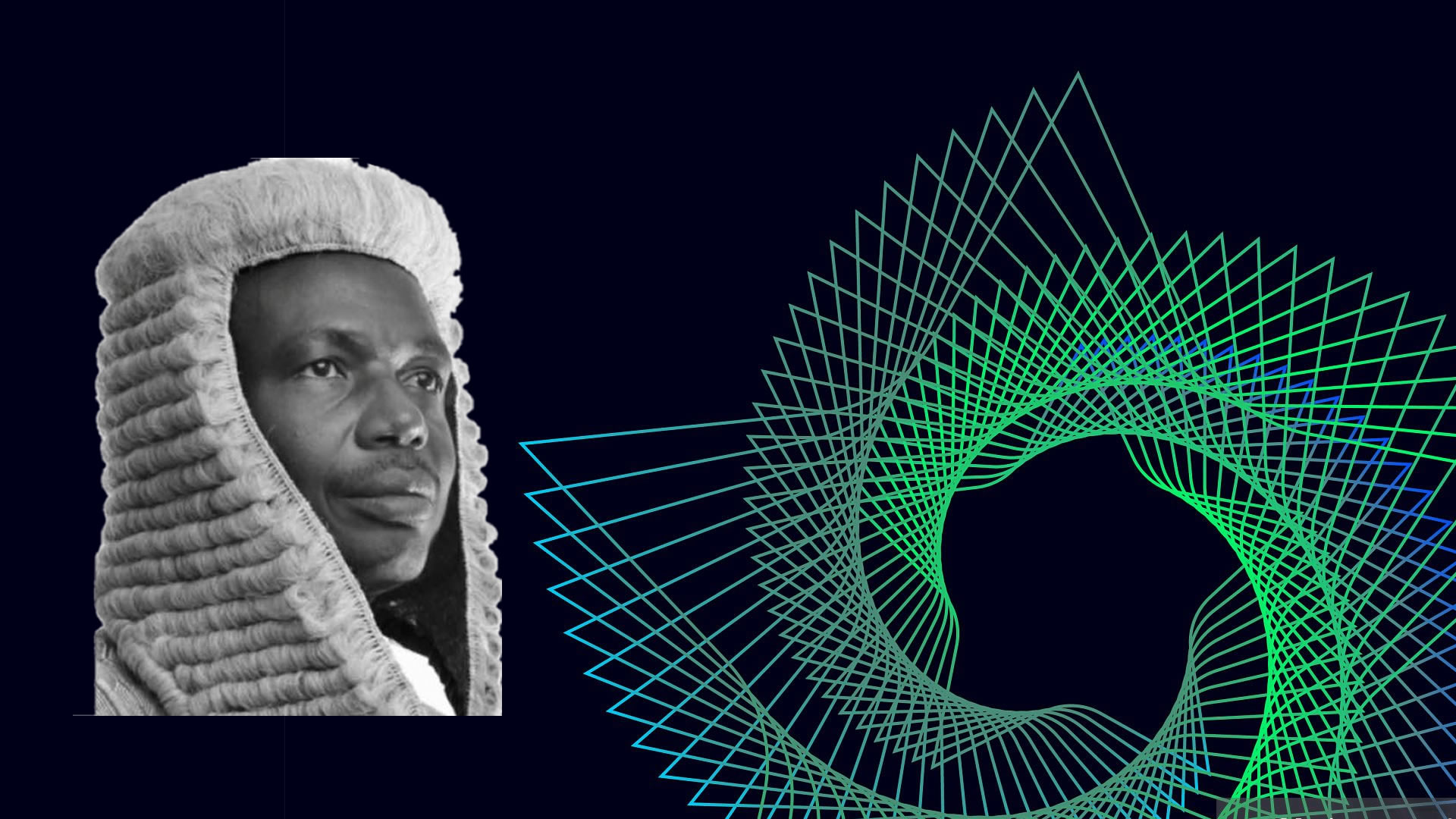
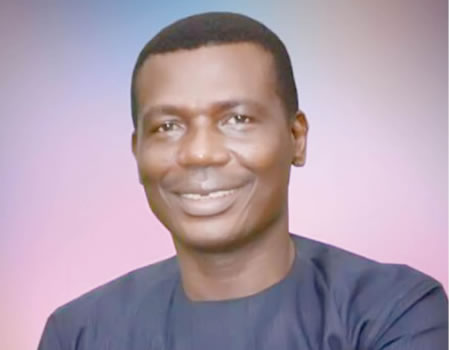
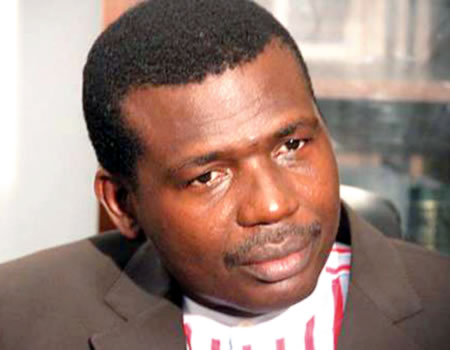
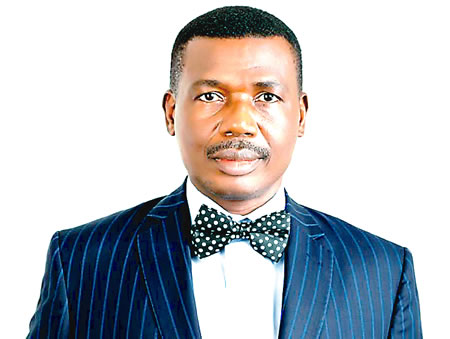
Ebun-Olu Adegboruwa, Nigerian lawyer, Senior Advocate and human rights advocate shares his thoughts, in an e-mail interview with LANRE ADEWOLE, on where the nation, humanity and leadership is headed after COVID-19.
Sir, have you reached out to Governor Babajide Sanwo-Olu over the state pardon you are seeking for Funke Akindele and husband, beyond your public advocacy on the matter?
I was involved in the case of Mr and Mrs Gbadamosi, which also involved Mr Azeez Fashola, aka Naira Marley. It was a golden opportunity to test the validity of the COVID 19 Regulations in court, but as you very well know by now, the parties decided to explore settlement out of court and I think it was good for them all.
It was after the last court proceedings of our case that I made the call upon the Governor of Lagos State to consider a state pardon for the Akindeles and not just the Akindeles but also all the joggers that were arrested on the streets.
For the Akindeles, I was moved by compassion for them. No doubt, it was a wrong exercise of discretion on their part to violate the guidelines of WHO, the directives of the President and the Governor, on social distancing, given the seriousness of the COVID 19 pandemic. And I think this is where a lot of people mistook my objection on the issue of restriction of movement. I fully support the measures taken by the government to contain the pandemic, as they are all meant to safeguard our lives. So, in that regard I do not endorse the idea of people gathering to celebrate birthday parties at this time. Indeed, I closed my office as far back as March 23, when I stopped seeing clients physically and I cancelled all our meetings, before we finally closed down on March 27.
So, before the Akindeles were arrested, they made a video apologizing for their indiscretion, which I think was genuine. At that point, I believe what the government should have done was to approach them to supply the details of all those who attended the birthday party in order to conduct tests for them and then isolate them, depending on the outcome of the test. We should not always see law as punitive alone but also corrective and reformative. I say this because there were other people who celebrated birthdays in Lagos and even abroad, who also breached the social distancing rule and nothing has happened to them. So, going ahead with the trial of the Akindeles and their subsequent conviction was like an overkill. So, I felt a sense of compassion for them which was what informed my appeal, given that herself and her husband could have explored the same option as we did in our case.
It was later in the evening of the same day of my appeal to the Governor on their behalf for a state pardon that I read that they had engaged my good friend, Mr Femi Falana, SAN, to take up an appeal on their behalf. With that knowledge, I could no longer formalize my appeal for pardon since they have decided to test the law on appeal. I support them in this regard as their case is similar to the old case of Aoko v Fagbemi, where a woman was accused of adultery and was charged to court. She pleaded guilty and was sentenced. The late Chief Rotimi Williams, SAN, took up her appeal, contending that the court had no jurisdiction to try her for an offence that was unknown to law. The appeal was allowed. Though I support the Akindeles in their appeal, but I think if a state pardon is granted to them by the Governor even now before the hearing of their appeal in court, it will achieve the same purpose.
A day before I made that appeal, the federal government announced amnesty for 2,600 convicts all over the nation. I reasoned that the Lagos State Government could buy into that window and show compassion on the Akindeles since they have shown sufficient remorse for their conduct. All over the world at that time, several countries were decongesting their prisons.
For the joggers, it would amount to double jeopardy, for you to be locked down at home, in one spot, eating and accumulating fats and forced into a sedentary lifestyle by reason of COVID 19. So that after you must have survived COVID 19, then you begin to battle other ailments. So, an exercise of the body in this regard should not be taken as a violation of the COVID 19 regulations. All that the government should do is to enforce the social distancing policy by advising the joggers not to mingle together in groups.
If the state is wrong according to you, a position shared by your fellow Silk, Mr. Femi Falana, that should also make the conclusion reached by the court, wrong. Why seek a state pardon then, instead of getting a higher court quash the conviction?
An appeal for pardon is not inconsistent with the exercise of the rights of the Akindeles to appeal against their convictions. At the time I made the call for their pardon, I was not aware that they had engaged Mr Falana, SAN, for their appeal. And my appeal is not inconsistent with my position that the basis upon which they were tried and convicted was wrong in law.
At that time when I made the appeal, they were already convicted by the Magistrate Court and the High Court, where their appeal will be heard, had been shut down and their case did not fall within the exceptions listed for hearing by the Chief Judge. And since no one knows how long the lockdown will last, the tag of ex-convict will keep hanging on them until their appeal is heard and allowed. So, in that regard, an appeal for a State pardon would be the best, because if they are pardoned now, then it will no longer be in their records that they were ever tried or convicted. And I believe the Governor can still exercise his prerogative in this regard, notwithstanding their decision to appeal.
AGF Malami was unsparing in his criticism of your criticism of the presidential lockdown of Lagos and Ogun. Is the entire exercise now legal and constitutional, including the renewal on Monday, vis a vis, what is going on between President Trump and some governors in America over who has the power to shut down and reopen sir?
My criticism of the President's decision on movement restriction was misunderstood by many. If there is any area in which I have supported this government, it is in respect of the steps taken to contain the COVID 19 pandemic. This is so because anything done to preserve human lives should enjoy the support of all. So, in that regard, I do commend the President and all the Governors and our leaders, for their responses. I have not ceased to praise Governor Sanwoolu and his Commissioner for Health, Prof Akin Abayomi, for their sterling performances in response to the pandemic. Lagos State has actually saved Nigeria, just as it did with the case of Ebola.
The point that I made and I am still making is that we should do the right things the right way. You cannot use the Quarantine Act to restrict the movement of citizens, against the Constitution. I was advocating for a law to guide the COVID 19 operations in order to achieve some form of predictability and orderliness, instead of the confusion and arbitrariness that we presently have. We had all the time to do that, as this pandemic started in 2019, that is why it is called COVID 19. And even at the time the President made his broadcast, it was still possible to have a global law that will serve as a guide for the conduct of affairs in this whole matter. Look at what is going on now. COVID 19 itself has claimed about 12 lives, most regrettably, but security operatives have killed not less than twenty persons at the last count, in seeking to enforce the movement restrictions.
The Security officers are confused on how to respond to the directives of the President and the Governors, who are all saying different things on the same subject. In Lagos and Abuja, it is total lockdown, in Ogun and some other States, it is partial lockdown. There is directive that markets should open between 10am and 2pm, which in itself is good so that people will not starve to death. But then the big question is how do you get to the market from your house when there is movement restriction? And we use the same police force, the same soldiers and security officers to enforce the different directives. In Ebonyi State for instance, the Governor gave a directive to shoot at sight anyone attempting to escape from the isolation centre! Can you imagine that? Whereas in Kaduna State, a man under isolation wanted to go and pray and it led to a serious battle between him and the security man. So, you can see the confusion all over the land. All that I was saying was that given the way our security agencies work, once you give room for personal discretion and interpretation for a particular policy, then you can be sure that abuse will follow, extortion will follow and even preventable death.
And just look at the directives of some of the Governors, some of them gave orders to lock their borders with other States and even with other countries. Where on earth can they exercise such powers? Under the Constitution in section 8 thereof, the issue of boundary of a State is exclusive to the National Assembly and no Governor has the power to regulate on it. Just look at Kogi State for instance, having access to about 6 or 8 other States. How do you lockdown the borders of such a State without violating section 41 of the Constitution which states that all citizens have the right to move in all parts of Nigeria? So, the Governor of Kogi State will give a directive that will restrict my movement to Abuja from Ondo State? That shouldn't be.
My second point is that of the concept of separation of powers. In law, at least by section 4 of our Constitution, only the legislature is granted the power to make laws to regulate human conduct. The executive is to enforce the laws and the courts are to interprete the laws. The law-making process is so that the people, through their elected representatives in parliament, are the ones making the laws to govern them, not just that one person will wake up one day and say that almost 40 million people in Lagos and Ogun States and Abuja should be locked down. And this is now being replicated by the Governors in their States without following due process and people are being sent to jail on account of this. As you can see that in Abuja, Lagos and other States, citizens are being arrested and tried and convicted based upon mere directives of the executive. It is not proper. Afterall, the President has been shown to conduct online conferences since the lockdown. Why not explore that option with the National Assembly to come up with a valid law to regulate the general operations of the pandemic instead of relying on personal judgments and feelings to regulate millions of people.
So, I believe that the Honourable Attorney-General of the Federation did not give me the opportunity to properly explain my position before his open criticism, as I was not opposing the President for the sake of it but asking that the right thing be done the right way.
I know you are a lawyer, but do you think there is reasonability trying to link COVID-19 to G-5 technology and is there any need for Nigeria as a nation to be circumspect in embracing the said controversial technology?
I have tried to follow this controversy and I honestly cannot place the connection at all. I mean we always seem to develop some phobia for new things here in our zone initially, only to turn around to embrace it after the rest of the world must have moved on, leaving us behind. We heard these stores of radiation long ago when Satellite dish first came and when we had the technology of mobile phone initially, but today, everyone has one decoder or the other and at least one mobile phone and we are still alive and breathing. We can't continue in that way, of opposing modern trends that have been embraced even in other parts of Africa. Let the 5G or 6G come and then we deal with its consequences the way the other parts of the world are dealing with it.
My own view of it is that the government and all the regulatory agencies involved should consult well on it and go ahead and deploy any good development that will contribute to the advancement of the human race. We are all here, so if it will harm us as some people are saying, then we go ahead and adopt what others who have already deployed it are using to preserve their lives and their environment. Personally, I can't wait to have the 5G or 6G, but I also agree with those who are sounding the note of caution for government to the all that is needful for our common protection and preservation.
Some state officials told us that the elite class in Eti-Osa LG has been very uncooperative in submitting themselves to test for the virus even when there are reasonable reasons to pull them in for it. The state is yet to make a pronouncement concerning the development. What can the commoners do, not to carry the can?
Well, I have read a lot of stories on the social media on this issue but you know one needs to be careful with unverified information that is sourced from the social media. It is a matter that should be investigated by the government and the NCDC and their findings should be made public. You know this is the genesis of COVID 19 in Kano, when the index case checked into a private hospital without disclosing his condition and this has spread and is still spreading in that State.
The general understanding that we all have is that testing and treatment for COVID 19 are to be centralized but it is not impossible to have cases of abuse or non-compliance but as we speak, there is no law barring anyone from seeking private treatment to preserve his own life because the Constitution in section 33 grants the right to life to every citizen. And it goes back to the points that I have laboured to make that we should have law to regulate the pandemic so that everyone is sure of what to do and what not to do and the consequences to follow.
The challenge however is that some Nigerians take this infection as some kind of stigma whereas others have been very bold and helpful with their situations, like Governors Bala Mohammed of Bauchi State, El-Rufai of Kaduna State and Seyi Makinde of Oyo State. The testimony of Governor Makinde of how he battled the infection has helped a lot of people and has given so many people hope that the pandemic is not a death sentence. I also listened to the story of the Chief Medical Director of the University Teaching Hospital, Ibadan, being a doctor himself, openly admitting his infection and telling us how he fought it and what we can all do not to be infected and then treatment upon infection. I actually think the government can do a lot to publicize such cases so that many can get out the phobia that COVID 19 seemed to have imposed on them.
So, all the so-called big men who are infected but are concealing it are only saying two things; first that they must have strayed to where they should not and they are not proud of their actions or that they do not care about the fate of their family members and their care givers who are being exposed. But like I said, it is only a rumour and we cannot judge people based upon information that is not verified or substantiated. But having said that, it is for government to investigate it, because of the danger posed to their care givers who may not have been properly trained for such sensitive treatment, and even their families and their loved ones. The reason for their isolation is to stop them from infecting others and thereby spreading the disease. It shouldn't be difficult for the government to secure the details of all travelers through the airlines. There is no mystery in this at all. But the option for the rest of us is to lie low and continue to observe the rules of personal hygiene and social distancing until such a time that God has intervened to defeat this monster.
The cash-by-hand palliative strategy of the federal and state governments has rankled to no end, considering reports from places like Gombe, Katsina, Kwara et al, that beneficiaries are being under-paid. Even Tinubu subtly kicked against the practice. What model can we adopt to cut out wheel-dealing middlemen and corrupt government officials sir?
As is common with our affairs, a lot of abuse have trailed this policy, especially as it involves the disbursement of funds. Some days ago, I read that the federal government terminated the contract of some of the entities engaged for the disbursement. That itself should tell you a lot about the corruption of that payment regime. But this does not detract from the good intention behind the policy, which deserves commendation. It is the implementation that seems to have some issues.
Preferably, investment of funds in food at this time, should be the primary concern of the government. Money is good but it becomes useless when it has no value. What can you truly buy with N20,000 in the present-day Nigeria, where even common tomato is regulated by the exchange rate? We should give food and other essential commodities to the indigent, the aged, widows, the unemployed and the vulnerable ones amongst us. Even if they steal the food, it will still end up in the stomach of somebody. It is easier to divert raw cash and the temptation is so very high, at this time. I recommend that the government should involve recognized faith-based organisations, market associations, community-based associations, etc, for effective distribution.
A lot of people have contested the data upon which the present disbursement is based, especially as it seems to discriminate against certain sections of the nation. Furthermore, since it is a measure meant to cushion the effect of the lockdown, it should be concentrated more in the areas where movement is restricted and people have no access to do their normal business. That is when it becomes a palliative, meant to cushion the effects of the anomaly.
Have you been tested sir?
I have not been tested for COVID 19 but I'm at home with my family observing the lockdown and all the directives of government. Even though I have my reservations on the mode of the directive, I have advocated compliance nonetheless, as a law-abiding citizen.
I don't know the modality of the testing yet but from what I've read in the news, if Eti-Osa where I'm based has 85% of the total figure of those tested already, I expect that by now, we should have many of us in this area tested, but may be it is a matter of time. But I'm here with my family and we are all fine and well by the grace of God, but whenever the government gets to us for testing, we are all ready and willing to cooperate with that regime, for our own good and for the good of all.
It is very important that the testing mechanism is accelerated because that will most probably determine how long this lockdown will last. Yesterday, I watched in the news when the United Kingdom stated that the test rate presently is 100,000 tests per day. That should be our target, even as we are praying for God's mercy so that it can end on time, as it will not be too good to remain idle for a long time. And the other concern is that the rainy season is at hand. Our people may not be able to cope with flood and pandemic all at the same time. But I know that the challenge is huge for the government, which is why we have all been commending our leaders in this regard and giving them all the support that is needed. Part of that support is the payment of tax by all citizens, so that the government can do more and we will have the locus to hold them accountable.
While staying at home with empty stomach, criminals are still not allowing residents of Lagos some peace. Isn't something dark looming, considering the people might revolt and call the bluff of the restriction regulations?
I'm personally shocked to see that there are still so many cult gangs in Lagos State, with such boldness and alacrity. With the resources available to this State, there is no reason we should be under the reign of cultists. There is a security trust fund to which handsome donations have been made, there is a huge IGR mechanism, in taxes, levies, fines, land use charges, toll fees on two major roads, federal allocation, oil allocation, etc. There is already an existing Neighbourhood Security outfit, which should work together with the police for intelligence gathering as a matter of policy. Then there is the community policing initiative, which should also be harnessed. When we get to the situation where you can't even go out during the day in Lekki Phase 1 to withdraw money from the ATM, then it is serious.
But the fundamental truth is that the youths are unemployed and unengaged and being young people with energy, they will become preys in the hands of whosoever is able to engage them, for good or for bad. So, the solution is employment.
The other point for Lagos State in particular is to de-emphasize the use of thugs during elections, because after the elections and there is nothing to do, these thugs will turn to criminals.
Since we don't know how long this lockdown will last, it is important to look at making the issue of palliatives more transparent and sustainable so that it will really get to those who need them and that may help to reduce the unrest. But beyond this, Lagos State should be innovative in the implementation of the lockdown regime. I mean you can't lockdown an economy so huge as Lagos State for so long. We should begin to relax the lockdown in phases as from next week, or else things may get out of hand.
What existential lessons should COVID-19 be teaching our leaders and even the led vis-a-vis the right kind of leadership? Those rejected politicians' bread as palliative, should hold some significance, I believe.
For the first time in the history of Nigeria, our leaders are confronted with their own wickedness, ineptitude, carelessness and wanton corruption, in just acquiring money for their own personal benefits without investing in social infrastructure. Who would have thought that all our billionaires will be forced to use our local hospitals? To imagine people with all the money but no means to travel, such that the money becomes totally useless.
It only means that the real substance of a person does not consist in the abundance of the things that he possesses but rather in how he's able to impact others. This whole world is just vanity upon vanity, after all. We should now begin to invest in our infrastructure, especially the hospitals, to equip them and make them useful for the good of all because one day, even the President's life may depend on it.
The other point is the vanity of human existence without a relationship with God. This COVID 19 pandemic has just demonstrated the need for everyone to be closer to God as no one can ever determine how and when God would require you to give account of your life here on earth. So, we should always approach life with the thought of godliness and doing good to others. We should be considerate to others and be willing to share at all times. It doesn't have to be something big, but at least we should reach out to those who are vulnerable and in need.
That is part of the lessons of this lockdown, namely that money is valueless if it is not impacting others one way or the other. Otherwise, the money is just in the bank wasting and depreciating. You can't go out, you can't work, there is limit on what you can even spend and even at that, you are not too sure of life to spend it. This is why the Bible is true as ever that a living dog is better than a dead lion. But I am sure that this whole pandemic will go, with God on our side and our leaders doing it right.